
Check what is already held for the goal
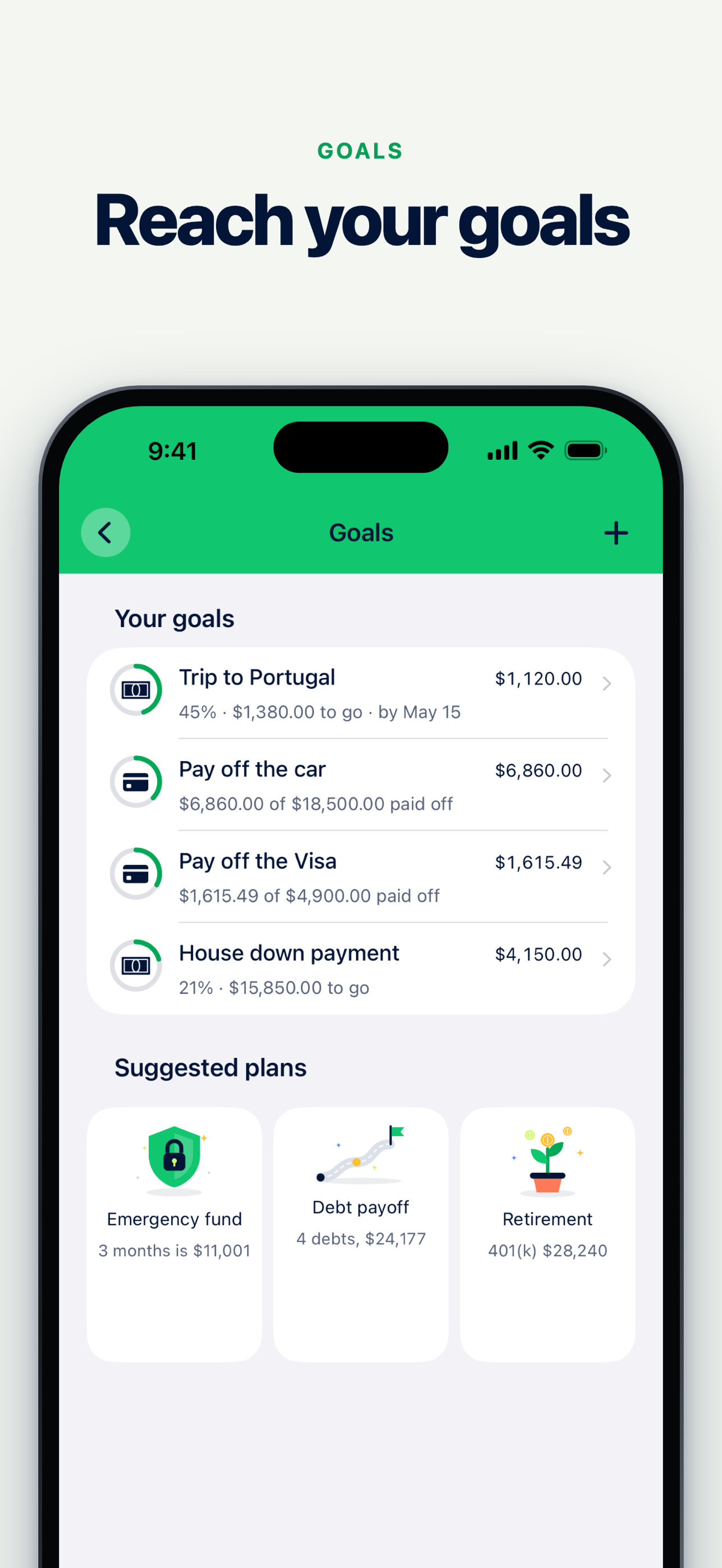
Review the accounts and shares attached to the goal. The full account balance is not necessarily reserved for this one purpose. Money shared across goals must still be counted once.
Suppose a fictional goal needs USD 1,000 and USD 200 is genuinely allocated to it. The remaining gap is USD 800. Another goal cannot also claim that same USD 200 as unassigned cash merely because both refer to one account.
Review the contribution plan
Keep the amount and actual payday schedule visible. The projection follows the saved contribution assumptions. It does not prove each future payday has enough capacity alongside your other expenses and goals.
With a fictional USD 100 contribution on each eligible payday, a USD 800 gap needs eight contributions before any other change. An actual target date, schedule change or contribution amount can alter the arrival calculation.
Separate planned and recorded contributions
A planned set-aside is not evidence of a completed bank transfer. Record an actual contribution through the supported goal flow when it happens, keeping its account and amount clear.
If a contribution was missed or changed, review the plan rather than assuming the old date remains achievable. A zero planned contribution does not create an invented arrival payday. A target already reached is different from an unfunded target with no usable schedule.
Read the date as a scenario
Keep expected future contributions separate from money held now. A projection can help you compare a target with a plan; it cannot guarantee income, returns or future account balances.
Review the goal, the related paycheck plan and the account holding the money together. They explain purpose, funding capacity and location without turning one balance into several copies.